
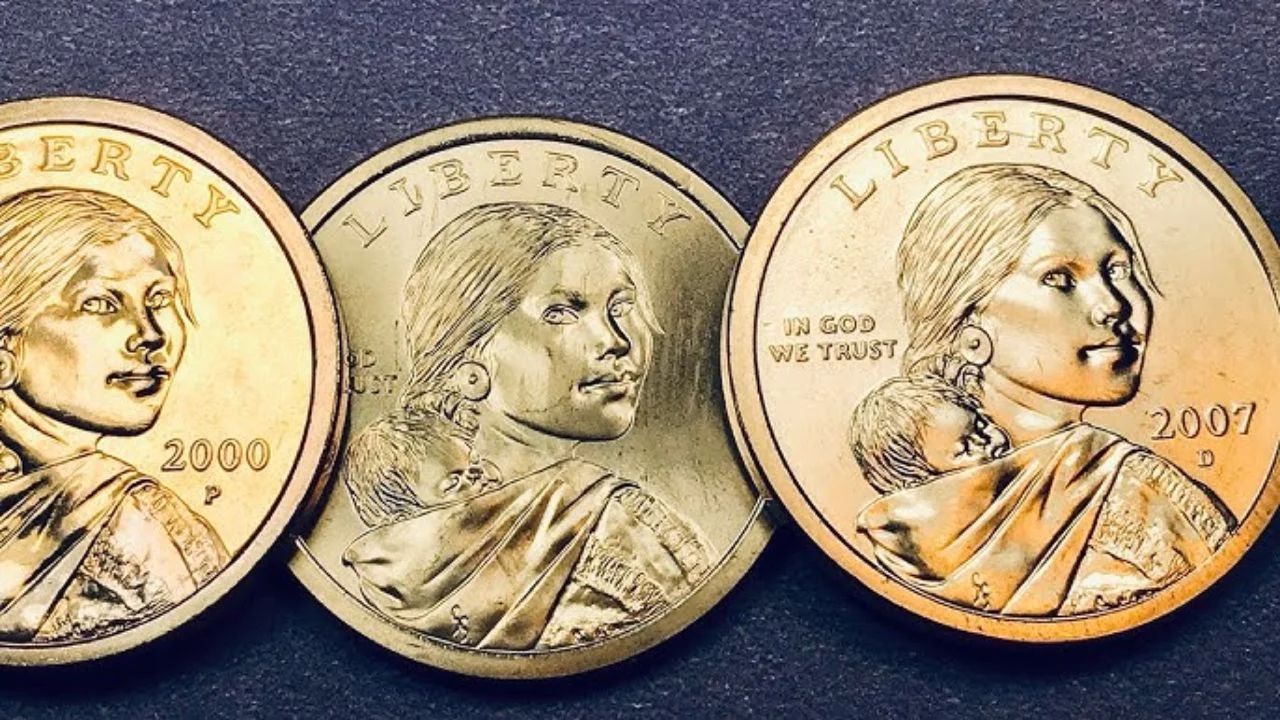
Most people assume that only ancient or gold coins sell for millions. Surprisingly, one of the most valuable U.S. coins ever sold is a modern $1 Sacagawea dollar. At first glance, it looks like an ordinary coin many Americans have spent without a second thought. Yet a rare minting error turned one example into a $2.1 million numismatic legend. This guide explains why that coin is so valuable, which Sacagawea dollars collectors actually search for, and how you can examine your own coins correctly.
The Sacagawea Dollar: A Modern Coin with Meaning
The Sacagawea dollar was introduced in 2000 to replace the unpopular Susan B. Anthony dollar and encourage everyday circulation.
Why This Coin Was Special
- Golden-colored, but not gold (manganese-brass clad)
- Features Sacagawea, the Shoshone guide of the Lewis and Clark Expedition
- Depicts her carrying her infant son, Jean Baptiste
- Designed to celebrate Native American history and contribution

Although billions were minted, early production runs created conditions where rare errors slipped through.
The $2.1 Million Sacagawea Coin Explained
The highest-priced Sacagawea dollar ever sold achieved $2.1 million at auction in 2023.
H3: The Record-Setting Error
This coin is known as a “mule” error, meaning it was struck using two mismatched dies:
- Obverse: Sacagawea dollar
- Reverse: Washington state quarter
These two dies were never meant to be paired. The result was a coin that should not exist, making it one of the rarest modern U.S. errors ever discovered.
Reference Table: Key Facts
| Detail | Information |
|---|---|
| Coin Type | Sacagawea Dollar |
| Error Variety | 2000-P Mule |
| Sale Price | $2.1 Million |
| Auction Year | 2023 |
| Authentication | PCGS / NGC |
| Mint | Philadelphia |
Other Valuable Sacagawea Dollar Varieties
While the mule error is unique, collectors actively seek other Sacagawea dollar errors that can still be worth significant money.
H3: Cheerios Dollar (1999 Issue)
- Distributed in Cheerios cereal boxes for promotion
- Features extra-sharp eagle tail feathers
- Genuine examples can sell for thousands to tens of thousands
H3: “Wounded Eagle” Error
- Found mainly on 2000-P coins
- Raised line across the eagle’s chest caused by die damage
- Popular with collectors and often worth hundreds to thousands
H3: Other Recognized Errors
- Off-center strikes
- Strike-through errors
- Die cracks and misaligned designs
Condition plays a major role in determining value.
How Collectors Examine Sacagawea Dollars

Finding a valuable coin starts with careful inspection.
H3: Quick Examination Tips
- Focus on 2000–2008 Sacagawea dollars
- Use a 5x–10x magnifying glass
- Look for:
- Unusual lines or marks
- Misaligned designs
- Incorrect reverses or missing details
- Compare with verified images from trusted numismatic sources
Always handle coins by the edges and store them safely.
What to Do If You Find a Possible Error
If you believe you’ve found a rare Sacagawea dollar, preservation is critical.
H3: Next Steps
- Do not clean or polish the coin
- Place it in a protective holder
- Visit a reputable local coin dealer for an initial opinion
- Submit it to PCGS or NGC for official grading and authentication
Professional certification is essential for resale or auction.
Frequently Asked Questions
Q1: Is my Sacagawea dollar worth $2.1 million?
No. That value applies to a unique mule error. Most are worth $1.
Q2: Which Sacagawea dollar year is most valuable?
The 2000-P issue is linked to the most valuable errors.
Q3: How can I identify a Cheerios Dollar?
Check for extremely sharp eagle tail feathers. Professional authentication is required.
Q4: Are later Native American dollars valuable?
Some low-mintage years carry small premiums, but not million-dollar values.
Q5: Should I get my coin graded?
Yes, if it shows a clear error or unusual features.
Conclusion
The $2.1 million Sacagawea dollar proves that modern coins can rival ancient treasures. While most Sacagawea dollars are worth face value, rare errors like the mule, Cheerios Dollar, and Wounded Eagle continue to excite collectors worldwide. With careful inspection and proper authentication, even an everyday coin could turn into an extraordinary discovery. Checking your change might be more rewarding than you think.